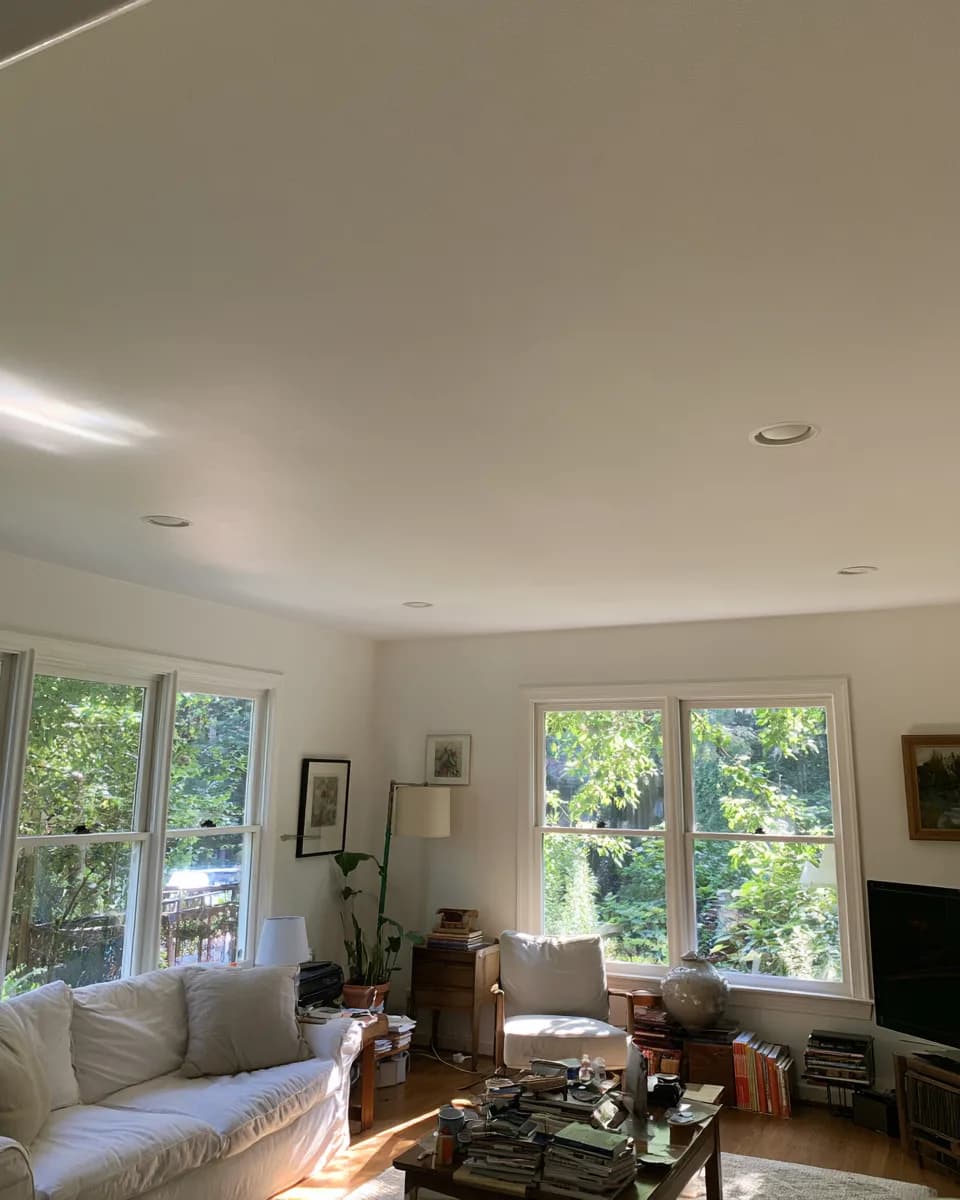
Sagging Ceiling Repair
A sagging or bowing ceiling is one problem you should not wait on, it usually means water, a failed fastener job, or a load issue above, and a heavy section can come down. Here is what causes it and how it is properly repaired.
Common Causes
Water Saturation
A leak above soaks the drywall and insulation, and the added weight pulls the ceiling down.
Fastener or Adhesive Failure
Too few screws, or old adhesive on older ceilings, let the drywall pull away from the joists.
Load or Structural Issues
Storage or movement above, or truss uplift, can stress the ceiling and cause sagging.
Warning Signs
- !A visible dip, bow, or bulge
- !Cracks following the sag
- !Drywall pulling away from the wall line
- !Any softness or water staining
How We Fix It
- 1Determine the cause, water, fasteners, or load, and address it first.
- 2Remove compromised drywall (and wet insulation) safely, keeping the area clear.
- 3Re-secure or replace with properly fastened drywall, finish, and texture-match.
What It Costs
Repairs range widely, $400-$2,000+, based on the cause and area. Water-related sagging includes drying and insulation work.
If You Ignore It
A saturated or detached ceiling section can collapse without warning, risking injury and damaging everything below. This is a call-now problem.
Frequently Asked Questions
Is a sagging ceiling an emergency?+
What causes a ceiling to sag without a leak?+
Can you match the texture after repair?+
Related service: Drywall & Ceiling Repair · Browse all common problems
Get Your Free Estimate