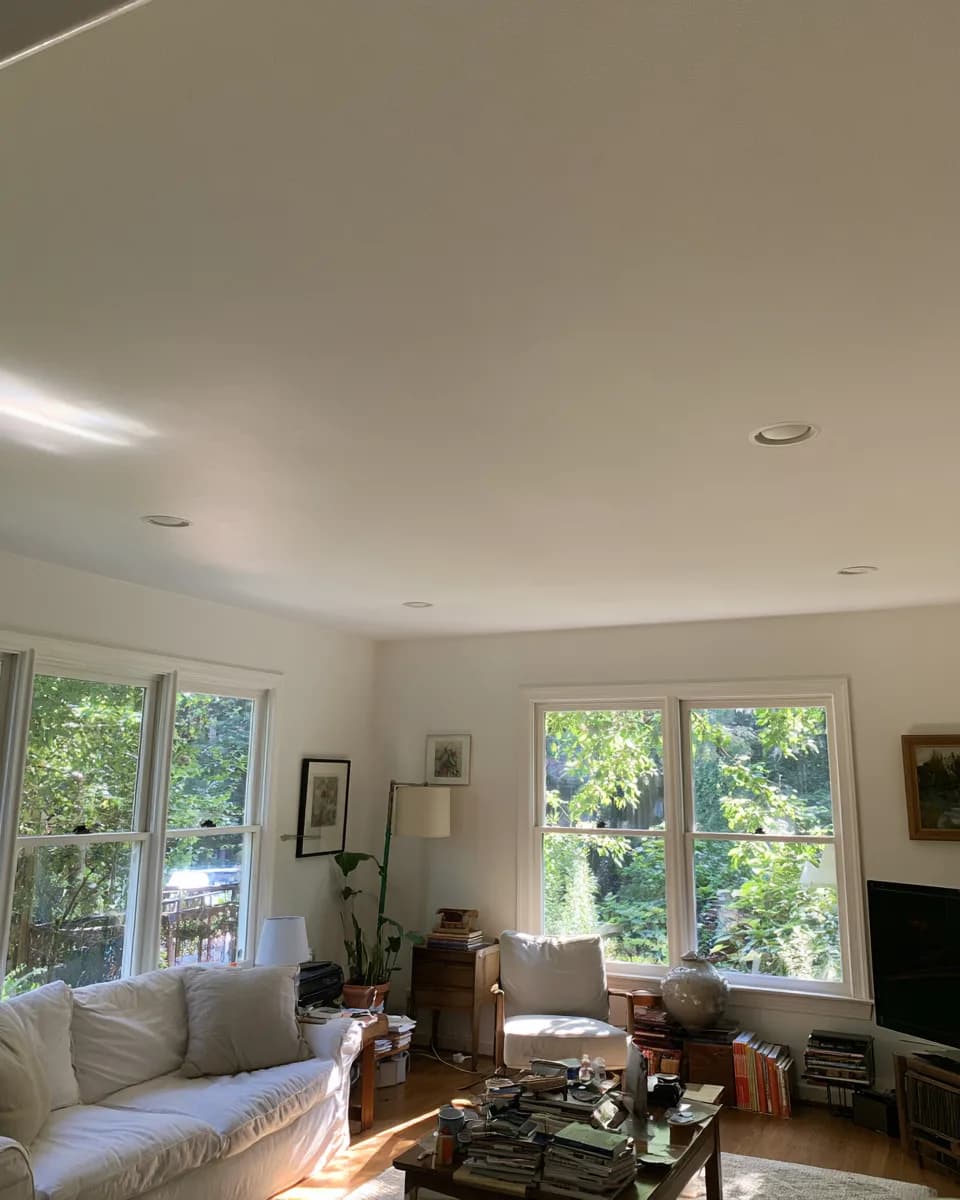
Ceiling Crack Repair
Most ceiling cracks are cosmetic, the result of normal settling and seasonal movement, but some point to a structural or moisture issue. The key is repairing them so they stay closed, not just skimming over them. Here is how we tell the difference and fix it for good.
Common Causes
House Settling & Seasonal Movement
Temperature and humidity swings make framing expand and contract, cracking the drywall seams and corners.
Failed Tape Joints
A poor original tape job lets seams crack repeatedly along straight lines.
Structural or Moisture Issues
Wide, spreading, or sagging cracks can signal truss uplift, overloading above, or water damage that needs attention first.
Warning Signs
- !Long straight cracks along seams
- !Spider-web cracks radiating from a point
- !Cracks that reopen after painting
- !Sagging or a height change along the crack
How We Fix It
- 1Assess whether the crack is cosmetic or a sign of a bigger issue.
- 2Cut out failed tape, re-tape with mesh or paper and compound, and feather multiple coats.
- 3Texture-match and prime so the repair blends and stays closed.
What It Costs
Typical ceiling crack repairs run $200-$700 depending on length and access. Structural or water-related causes are addressed separately.
If You Ignore It
A simple crack left alone keeps reopening and widening, and a structural crack that is painted over hides a problem that gets worse and more expensive.
Frequently Asked Questions
Why does my ceiling crack keep coming back?+
Is a ceiling crack dangerous?+
Can you match my ceiling texture?+
Related service: Drywall Repair & Finishing · Browse all common problems
Get Your Free Estimate